A gala is a special event held to celebrate an occasion, raise money, honor people, or bring a community together. It often includes formal clothing, dinner, entertainment, speeches, or awards.
The word is commonly used for charity fundraisers, business celebrations, award ceremonies, and elegant social gatherings.
People search for synonyms for gala when they want to make their writing more precise, avoid repeating the same word, or choose a phrase that better matches an event’s purpose.
For example, fundraiser emphasizes collecting money, banquet highlights a formal meal, and celebration focuses on a happy occasion. Although these terms are related, they are not always interchangeable.
The best alternative depends on the event’s atmosphere, purpose, audience, and level of formality. This guide explains the most useful alternatives, provides examples, and shows you how to choose the right word for professional emails, invitations, academic writing, event announcements, and everyday conversations.
Quick Answer: What Are the Best Synonyms for Gala?
The best synonyms for gala include formal event, celebration, reception, banquet, ball, formal dinner, fundraising event, benefit, awards ceremony, and special occasion. A banquet emphasizes a formal meal, while a ball usually involves dancing. For charity events, fundraiser or benefit may be more precise. Choose an alternative that reflects the event’s purpose and atmosphere.
Quick List: 30+ Alternatives for Gala
Here are useful alternatives grouped by meaning and context.
Closest Alternatives
These expressions can replace gala in suitable contexts:
- Formal event
- Special event
- Grand celebration
- Festive occasion
- Social gathering
- Formal gathering
- Celebration
- Evening event
Formal Alternatives
Use these expressions for invitations, business announcements, and formal writing:
- Reception
- Banquet
- Ball
- Formal dinner
- Awards ceremony
- Commemorative event
- Ceremonial gathering
- Distinguished reception
- Annual celebration
- Official function
Charity and Fundraising Alternatives
These terms work particularly well when raising money is the event’s main purpose:
- Fundraiser
- Charity event
- Benefit
- Fundraising dinner
- Charity banquet
- Philanthropic event
- Benefit dinner
- Donation event
Neutral and Everyday Alternatives
These words describe gatherings and celebrations without necessarily suggesting luxury or formality:
- Party
- Gathering
- Celebration
- Get-together
- Special occasion
- Community event
- Evening celebration
- Public event
Quick tip: Use gala when you want to suggest a special, often elegant occasion. Choose fundraiser when raising money is the main goal, banquet when a formal meal is central, and reception when welcoming guests is the focus.
Formal Alternatives to Gala
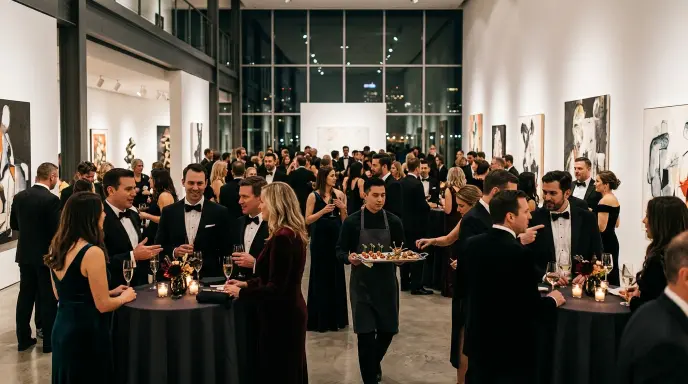
Formal alternatives are useful for business communication, event invitations, organizational announcements, and professional publications. However, each term describes a slightly different kind of occasion.
1. Formal Event
Meaning: An organized occasion with an established structure or dress code.
Explanation: This is one of the most flexible alternatives to gala. It preserves the idea of a planned, special gathering without suggesting a particular activity.
Example: The museum will host a formal event to celebrate its new exhibition.
Best Use: Professional announcements, event calendars, and invitations.
Worst Use: Informal parties where the word may sound unnecessarily serious.
Tone: Professional, neutral, and polished.
2. Banquet
Meaning: A formal meal served to a group of guests, often as part of a celebration or official occasion.
Explanation: A banquet is a good alternative when dining is a major part of the gala. It does not automatically suggest fundraising, awards, or dancing.
Example: The university organized a banquet to honor its outstanding graduates.
Best Use: Award dinners, corporate meals, and formal celebrations.
Worst Use: Events centered on performances or dancing without a substantial meal.
Tone: Formal, traditional, and dignified.
3. Reception
Meaning: An organized gathering where guests are welcomed, often for social or professional purposes.
Explanation: A reception may include refreshments, speeches, or networking. It can be less elaborate than a gala, so the terms are not always interchangeable.
Example: The company held a reception to celebrate the opening of its new office.
Best Use: Business gatherings, exhibition openings, and welcoming events.
Worst Use: Describing a large charity dinner when fundraising is the main focus.
Tone: Professional, courteous, and refined.
4. Ball
Meaning: A formal social event that traditionally includes dancing.
Explanation: A ball can resemble a gala, especially when guests wear formal clothing and enjoy music or entertainment. However, dancing is an important distinction.
Example: The organization hosted an annual charity ball to support local schools.
Best Use: Elegant evening events, formal dances, and traditional celebrations.
Worst Use: A conference or business dinner with no dancing.
Tone: Elegant, traditional, and sophisticated.
5. Official Function
Meaning: A formal event organized by an institution, company, government body, or other organization.
Explanation: This expression emphasizes the event’s official nature rather than its entertainment or celebratory atmosphere.
Example: The ambassador attended an official function at the cultural center.
Best Use: Institutional announcements and diplomatic or professional contexts.
Worst Use: Casual social gatherings or informal parties.
Tone: Formal, institutional, and reserved.
6. Commemorative Event
Meaning: An occasion organized to remember or honor a person, achievement, or important event.
Explanation: This term is appropriate when the purpose of a gala is to recognize history, mark an anniversary, or pay tribute to someone.
Example: The foundation organized a commemorative event to mark its twentieth anniversary.
Best Use: Anniversaries, memorial occasions, and historical celebrations.
Worst Use: A purely social event without a commemorative purpose.
Tone: Respectful, formal, and meaningful.
7. Ceremonial Gathering
Meaning: A gathering organized around a ceremony or formal observance.
Explanation: This phrase emphasizes the structured or symbolic part of an occasion. It may describe a gala that includes awards or formal presentations, but it does not necessarily imply dinner or entertainment.
Example: The academy arranged a ceremonial gathering to recognize its retiring director.
Best Use: Institutional recognition and formal observances.
Worst Use: Informal celebrations where no ceremony takes place.
Tone: Respectful and dignified.
8. Distinguished Reception
Meaning: A reception intended to be especially prestigious or attended by notable guests.
Explanation: This phrase adds a sense of status to an ordinary reception. Use it only when the event genuinely has a distinguished character.
Example: The arts council held a distinguished reception for visiting international artists.
Best Use: Cultural institutions, professional organizations, and high-profile occasions.
Worst Use: Small, routine meetings where the description sounds exaggerated.
Tone: Sophisticated and prestigious.
9. Formal Dinner
Meaning: A planned dinner that follows a formal dress code, schedule, or etiquette.
Explanation: A formal dinner can replace gala when dining is the central feature. It is more specific and does not automatically imply entertainment or fundraising.
Example: The association hosted a formal dinner to recognize its long-serving members.
Best Use: Corporate dinners, award nights, and professional celebrations.
Worst Use: Events where the main attraction is a concert, exhibition, or dance.
Tone: Professional, elegant, and traditional.
10. Awards Ceremony
Meaning: An organized occasion at which prizes, honors, or recognition are presented.
Explanation: Some galas include award presentations. If recognition is the main purpose, awards ceremony is clearer than the broader term gala.
Example: The school held an awards ceremony to celebrate students’ academic achievements.
Best Use: Recognition events, professional honors, and achievement celebrations.
Worst Use: A charity dinner that does not include awards.
Tone: Official, celebratory, and respectful.
Semi-Formal and Neutral Alternatives

Neutral alternatives are useful when you want clear language without making an event sound overly luxurious or ceremonial.
11. Special Event
Meaning: An occasion that is different from an organization’s or community’s usual activities.
Explanation: This broad phrase works when the exact format of the gathering is less important than its significance.
Example: The library is organizing a special event to celebrate its renovation.
Best Use: Websites, event calendars, public notices, and general announcements.
Worst Use: Situations where readers need to know whether the event is a dinner, ceremony, or fundraiser.
Tone: Neutral and accessible.
12. Celebration
Meaning: An event or activity that expresses happiness about an achievement, milestone, or occasion.
Explanation: A celebration emphasizes the reason for gathering rather than the event’s formal structure.
Example: The team held a celebration after completing the project successfully.
Best Use: Anniversaries, achievements, milestones, and community occasions.
Worst Use: Formal events whose main purpose is a serious discussion or official announcement.
Tone: Positive, warm, and flexible.
13. Social Gathering
Meaning: An occasion where people meet to interact socially.
Explanation: This phrase emphasizes conversation and relationships rather than luxury, ceremony, or fundraising.
Example: The association arranged a social gathering for its new members.
Best Use: Networking events, member meetings, and community activities.
Worst Use: A highly structured awards ceremony where the phrase understates the event’s formality.
Tone: Friendly and neutral.
14. Evening Event
Meaning: An organized occasion that takes place during the evening.
Explanation: This alternative highlights timing rather than purpose. It is useful when the audience already understands the event’s nature.
Example: The gallery will host an evening event featuring local musicians.
Best Use: Event schedules, promotional materials, and invitations.
Worst Use: Describing the event’s purpose without additional information.
Tone: Neutral and descriptive.
15. Annual Celebration
Meaning: A celebration held once each year.
Explanation: This phrase is suitable for recurring organizational events. It highlights the schedule and celebratory purpose, not necessarily the event’s level of luxury.
Example: The nonprofit’s annual celebration will recognize volunteers and community partners.
Best Use: Company anniversaries, nonprofit events, and yearly gatherings.
Worst Use: A one-time event that will not be repeated annually.
Tone: Professional and celebratory.
16. Community Event
Meaning: An activity organized for people in a particular community or group.
Explanation: This expression is useful when a gala brings residents, families, or local organizations together.
Example: The town’s community event will raise money for the public library.
Best Use: Local announcements, neighborhood programs, and public activities.
Worst Use: A private corporate dinner where community participation is not relevant.
Tone: Inclusive and approachable.
17. Fundraising Event
Meaning: An organized activity intended to collect money for a cause, organization, or project.
Explanation: This phrase is often more informative than gala when the primary goal is collecting donations. It does not specify whether the event includes dinner, dancing, or speeches.
Example: The hospital organized a fundraising event to support its children’s ward.
Best Use: Charity websites, nonprofit announcements, and donation campaigns.
Worst Use: A celebration with no fundraising objective.
Tone: Clear, professional, and purpose-driven.
18. Benefit
Meaning: An event organized to raise money or provide support for a person, cause, or organization.
Explanation: In event terminology, benefit often refers to a fundraising occasion, as in benefit concert or benefit dinner. By itself, the word can have other meanings, so additional context may help.
Example: The theater hosted a benefit for families affected by the flood.
Best Use: Charity events, performances, and fundraising campaigns.
Worst Use: General celebrations that do not support a cause.
Tone: Purposeful and professional.
19. Public Celebration
Meaning: A celebration open to members of the public.
Explanation: This phrase emphasizes accessibility rather than exclusivity or formal dress.
Example: The city organized a public celebration to mark the opening of its new park.
Best Use: Civic milestones, festivals, and community achievements.
Worst Use: Private invitation-only events.
Tone: Inclusive and straightforward.
20. Recognition Event
Meaning: An organized occasion designed to acknowledge contributions, service, or achievements.
Explanation: This phrase works when a gala honors employees, volunteers, donors, students, or other contributors.
Example: The company arranged a recognition event for employees who had completed ten years of service.
Best Use: Employee appreciation, volunteer awards, and organizational achievements.
Worst Use: A purely recreational gathering without a recognition component.
Tone: Appreciative and professional.
Informal and Casual Alternatives
Casual alternatives can make an announcement sound friendly and accessible. They may not preserve the elegance or prestige associated with a gala.
21. Party
Meaning: A social event where people gather to celebrate, eat, talk, or enjoy entertainment.
Example: The team is throwing a party to celebrate the company’s anniversary.
When It Sounds Natural: Casual conversations, friendly invitations, and informal workplace messages.
When to Avoid It: Formal invitations for prestigious charity events or official ceremonies.
Tone: Relaxed, cheerful, and informal.
22. Get-Together
Meaning: An informal gathering of people who know one another or share an interest.
Example: The club is hosting a get-together for new members this Friday.
When It Sounds Natural: Small gatherings, informal networking, and friendly community activities.
When to Avoid It: Large formal dinners or events with a strict dress code.
Tone: Warm, casual, and welcoming.
23. Big Celebration
Meaning: A celebration that is important, exciting, or larger than usual.
Example: The school is planning a big celebration for its fiftieth anniversary.
When It Sounds Natural: Everyday conversation and accessible promotional writing.
When to Avoid It: Formal documents that require precise information about the event.
Tone: Enthusiastic and conversational.
24. Party Night
Meaning: An evening organized mainly for socializing and entertainment.
Example: The student association is planning a party night to welcome new students.
When It Sounds Natural: Student activities, informal social events, and entertainment announcements.
When to Avoid It: Serious fundraising dinners, award ceremonies, and formal institutional events.
Tone: Energetic and informal.
25. Special Night
Meaning: An evening considered important, memorable, or different from an ordinary night.
Example: The volunteers enjoyed a special night celebrating their achievements.
When It Sounds Natural: Invitations, personal messages, and promotional copy.
When to Avoid It: Formal reports where the exact purpose and format must be stated.
Tone: Friendly, positive, and slightly emotional.
True Synonyms vs. Contextual Alternatives
Not every word associated with a gala is a direct synonym. Some describe the overall event, while others identify a specific activity or purpose.
| Type | What It Means | Can It Replace Gala? |
|---|---|---|
| True or close synonym | A phrase with a similar general meaning, such as formal event | Often, if the context fits |
| Near synonym | A related term with a slightly different emphasis, such as reception | Sometimes |
| Contextual alternative | A term suited to a particular purpose, such as fundraiser | Only when that purpose applies |
| Broader expression | A general term, such as special occasion | Yes, but some detail may be lost |
| Narrower expression | A specific event type, such as awards ceremony | Only when the gala fits that description |
Is a Banquet the Same as a Gala?
Not exactly. A banquet is primarily a formal meal, while a gala is a special event that may include dinner, dancing, performances, speeches, or fundraising. A gala can include a banquet, but a banquet does not always qualify as a gala.
Is a Reception the Same as a Gala?
A reception is usually a gathering designed to welcome guests or encourage social interaction. A gala is often more elaborate and may have a wider program. The terms overlap when a gala includes a reception, but they are not universally interchangeable.
Is a Fundraiser the Same as a Gala?
A fundraiser is defined by its purpose: raising money. A gala is defined more by the nature of the event. A charity gala can be a fundraiser, but fundraising activities can also include auctions, walks, online campaigns, and community sales.
Industry-Specific Usage
The best alternative depends on the industry, audience, and purpose of the event.
Business Writing
In business writing, prioritize clarity over decorative language.
Useful alternatives include:
- Formal event: Suitable for general announcements.
- Corporate reception: Appropriate for welcoming clients or partners.
- Annual celebration: Useful for recurring company milestones.
- Recognition event: Appropriate for honoring employees.
- Awards ceremony: Best when presenting awards is the main activity.
Example:
Instead of writing, “Our company will host a gala next month,” you could write, “Our company will host a formal event next month to recognize outstanding employees.”
The revised version gives readers more information about the occasion.
Corporate Communication
Corporate announcements should explain the event’s purpose and expected audience.
For example:
- “The annual corporate gala will recognize outstanding performance.”
- “The company will hold an awards ceremony for its highest-performing teams.”
- “A reception will follow the annual business meeting.”
These phrases are not identical. Choose gala for a special, often elaborate occasion, awards ceremony for recognition, and reception for welcoming guests.
Academic Writing
Academic writing generally benefits from descriptive and precise language.
Useful options include formal event, fundraising event, ceremonial gathering, and recognition event.
Example:
Less precise: “The university arranged a gala for its students.”
More informative: “The university organized a fundraising dinner to support student scholarships.”
The second sentence explains the purpose. In research papers, describe the event’s actual function rather than choosing a more sophisticated-sounding word.
Customer Service
Customer-facing communication should be clear, welcoming, and easy to understand.
For example:
- “Thank you for registering for our annual celebration.”
- “We look forward to welcoming you to the charity dinner.”
- “Your invitation to the fundraising event has been confirmed.”
Avoid calling an event a ball or banquet unless that description is accurate. Customers need practical information about what to expect.
Legal and Official Writing
Legal writing requires particular care because event names may appear in contracts, sponsorship agreements, insurance documents, or venue policies.
Words such as function, reception, banquet, and special event may describe different activities depending on the document. Do not replace a defined term in a contract simply because another word sounds similar.
Example: If a venue agreement defines a “gala event” as including dinner, entertainment, and a fundraising auction, replacing that phrase with “reception” could change the apparent scope of the agreement.
Use the terminology defined in the relevant document. When legal obligations depend on the wording, obtain qualified legal advice rather than relying on a general synonym.
Email Communication
Professional emails benefit from specific descriptions.
Compare these examples:
- Client invitation: “We would be delighted to welcome you to our annual fundraising dinner.”
- Internal announcement: “Our employee recognition event will take place on November 15.”
- Vendor coordination: “Please confirm the catering arrangements for the formal banquet.”
- Meeting follow-up: “The reception will begin immediately after the presentation.”
Each alternative tells the recipient something different about the event.
Email Examples Using Alternatives for Gala
The following complete emails demonstrate how to use different terms naturally.
1. Client Invitation: Formal Event
Dear Ms. Taylor,
We are pleased to invite you to our annual formal event on November 20 at the Riverside Conference Center.
The evening will bring together our clients, partners, and team members to celebrate this year’s achievements and discuss our plans for the coming year.
Please confirm your attendance by November 10. We would be delighted to see you there.
Best regards,
Event Coordination Team
2. Charity Organization: Fundraising Dinner
Dear Community Partner,
We are organizing a fundraising dinner to support our after-school education program.
The event will take place on December 5 and will include dinner, a short presentation about our work, and an opportunity to contribute to the program.
Your support would help us provide learning materials and educational activities for local students.
Thank you for considering our invitation.
Sincerely,
Community Outreach Team
3. Employee Appreciation: Recognition Event
Hello Team,
We are pleased to announce our upcoming employee recognition event, scheduled for Friday, November 14.
The event will celebrate the dedication and achievements of colleagues across our departments. Further details about the venue, schedule, and registration will be shared next week.
Thank you for the effort and commitment you bring to your work.
Best,
Human Resources Team
4. Vendor Coordination: Banquet
Dear Mr. Lewis,
I am writing to confirm the catering arrangements for our annual banquet on November 22.
Please send the updated menu, final per-person pricing, and confirmation of the dietary options available for guests. We would also appreciate confirmation of the delivery and setup schedule.
Kindly send these details by November 8 so that we can finalize the event plan.
Thank you for your assistance.
Best regards,
Events Manager
5. Professional Networking: Reception
Dear Colleagues,
You are invited to attend our industry reception on October 30 following the afternoon seminar.
The reception will provide an opportunity to meet fellow professionals, exchange ideas, and continue discussions from the session in a relaxed setting.
Please register by October 25 so that we can make the necessary arrangements.
We look forward to seeing you.
Kind regards,
Professional Development Team
Short Dialogue Examples
These mini-dialogues show how people might choose different alternatives in everyday situations.
1. Workplace
Person A: What is the company planning for its anniversary?
Person B: A formal event with dinner and employee awards.
Person A: That sounds more informative than simply calling it a party.
2. Classroom
Person A: What is the university organizing next month?
Person B: An awards ceremony for students who performed well academically.
Person A: So it is more about recognition than entertainment?
Person B: Exactly.
3. Customer Service
Person A: Is the charity gala open to the public?
Person B: Yes, but guests need to register in advance.
Person A: Is it mainly a fundraising event?
Person B: Yes. The proceeds will support the local hospital.
4. Casual Conversation
Person A: Are you attending the club’s event this weekend?
Person B: Yes, but I heard it is just a casual get-together.
Person A: Great! I thought it was going to be a formal banquet.
5. Professional Discussion
Person A: Should we call the event a reception or a gala?
Person B: Since it includes dinner, entertainment, and a charity auction, gala sounds more appropriate.
Person A: Agreed. That description better reflects the program.
How to Replace “Gala” in a Sentence
The following examples show how changing the word can make a sentence more specific.
Example 1: General Announcement
Original: The museum will host a gala next month.
Alternative: The museum will host a formal event next month.
Why it works: Formal event is a broad alternative that does not assume the gathering includes dinner or fundraising.
Example 2: Charity Fundraising
Original: The hospital organized a gala to support its patients.
Alternative: The hospital organized a fundraising dinner to support its patients.
Why it works: The alternative explains the event’s purpose and format. Use it only if the event includes dinner.
Example 3: Employee Awards
Original: The company held a gala to celebrate its employees.
Alternative: The company held an awards ceremony to recognize its employees.
Why it works: This version emphasizes recognition. It is most accurate if awards or formal honors are part of the program.
Example 4: Networking
Original: The organization arranged a gala for industry professionals.
Alternative: The organization arranged a reception for industry professionals.
Why it works: Reception emphasizes welcoming guests and encouraging conversation. It may understate the scale of a more elaborate event.
Example 5: Formal Dining
Original: The association hosted a gala for its members.
Alternative: The association hosted a banquet for its members.
Why it works: Banquet is suitable when a formal meal is central to the occasion.
Example 6: Annual Milestone
Original: The nonprofit held a gala to celebrate its tenth anniversary.
Alternative: The nonprofit held an annual celebration to mark its tenth anniversary.
Why it works: The alternative emphasizes the celebration, although annual should be used only if the event is part of a yearly tradition.
Example 7: Local Community
Original: The city organized a gala to celebrate the new park.
Alternative: The city organized a public celebration to mark the opening of the new park.
Why it works: Public celebration highlights community participation and the reason for the gathering.
Example 8: Employee Appreciation
Original: The organization hosted a gala to honor its volunteers.
Alternative: The organization hosted a recognition event to honor its volunteers.
Why it works: This wording makes the event’s purpose clear without implying a luxurious setting.
Example 9: Formal Dancing
Original: The charity organized a gala to raise money for children.
Alternative: The charity organized a charity ball to raise money for children.
Why it works: Charity ball suggests a formal event that includes dancing. It should not be used if dancing is not part of the occasion.
Example 10: Simple Communication
Original: We are delighted to invite you to our annual gala.
Alternative: We are delighted to invite you to our annual celebration.
Why it works: Celebration sounds more general and approachable. Retain gala if the event’s formal or prestigious character matters.
Comparison Table: Choosing the Right Alternative
| Phrase | Tone | Meaning or Scope | Best Use | Example |
|---|---|---|---|---|
| Formal event | Professional | A structured, formal occasion | Business announcements | We will host a formal event. |
| Banquet | Traditional | A formal meal | Award dinners | The banquet begins at 7 p.m. |
| Reception | Professional | A gathering to welcome or socialize | Networking | Join us for a reception. |
| Ball | Elegant | A formal event associated with dancing | Charity dances | The charity ball is on Saturday. |
| Fundraiser | Purpose-driven | An event to collect money | Nonprofits | The fundraiser supports local schools. |
| Benefit | Professional | An event supporting a cause | Charity programs | The benefit will support the shelter. |
| Awards ceremony | Official | An event presenting awards | Recognition | The awards ceremony starts at noon. |
| Celebration | Positive | An occasion marking something important | Anniversaries | The celebration marks ten years. |
| Special event | Neutral | An unusual or significant occasion | Websites and calendars | Register for our special event. |
| Social gathering | Friendly | An occasion for interaction | Clubs and groups | The group planned a social gathering. |
| Recognition event | Professional | An occasion honoring contributions | Employee appreciation | The recognition event honors volunteers. |
| Get-together | Casual | An informal gathering | Friends and clubs | We are having a get-together. |
Which Alternative Should You Choose?
The right word depends on what you want readers to understand.
- For formal writing: Choose formal event when you need a broad, professional description.
- For business communication: Use corporate reception, formal dinner, or recognition event, depending on the program.
- For academic writing: Prefer descriptive terms such as fundraising event or awards ceremony when they accurately explain the occasion.
- For legal writing: Use the exact term defined in the relevant contract or policy.
- For professional emails: Choose a specific phrase, such as annual banquet or charity dinner, when the details are known.
- For everyday conversation: Celebration, party, and special event sound natural in many situations.
- For casual messages: Use get-together or special night when the occasion is informal.
- For fundraising: Choose fundraiser, benefit, or fundraising dinner based on the actual format.
- For dancing: Use ball if formal dancing is a defining feature.
- For welcoming guests: Choose reception when socializing and hospitality are central.
If none of these terms captures the event’s full character, keep the word gala. A synonym is useful only when it communicates the intended meaning more accurately.
Grammar and Usage Guide
Is Gala a Noun?
Yes. Gala is a countable noun when it refers to a special event.
Examples:
- The organization hosted a gala.
- Two galas will take place this year.
- We attended the annual gala.
Use a or an according to the sound of the following word. Because gala begins with a consonant sound, write a gala.
What Is the Plural of Gala?
The standard plural is galas.
Examples:
- The museum hosts several galas each year.
- Three charity galas are scheduled for December.
Avoid galaes. The word follows the regular pattern of adding -s.
Should Gala Be Capitalized?
Use lowercase gala in ordinary sentences.
Correct: The annual gala will take place in November.
Capitalize it when it forms part of an official event name or appears at the beginning of a sentence.
Example: The organization announced its Autumn Gala for Education.
Follow the organization’s official capitalization when referring to a named event.
Which Prepositions Work With Gala?
Common combinations include:
- At a gala: We met several donors at the gala.
- Host a gala: The foundation will host a gala.
- Attend a gala: She plans to attend the annual gala.
- Gala for a cause: They organized a gala for cancer research.
- Gala honoring someone: The museum held a gala honoring its founder.
These combinations also work with related terms, although the exact wording may change.
For example, you can attend a reception, host a banquet, or organize a fundraiser.
What Is the Difference Between Gala and Galore?
The words gala and galore are unrelated in meaning.
- Gala: A special event, often formal or celebratory.
- Galore: An informal word meaning plentiful or abundant.
Example: The charity gala featured desserts galore.
Here, gala names the event, while galore describes the abundance of desserts.
Common Mistakes to Avoid
1. Treating Every Alternative as an Exact Synonym
A banquet focuses on dining, while a fundraiser focuses on collecting money. Neither automatically describes every gala.
Better approach: Identify the event’s purpose before selecting a replacement.
2. Using “Ball” Without Dancing
A ball traditionally involves formal dancing. Using the word for a dinner-only event can create the wrong expectation.
Better approach: Choose formal dinner or banquet if dining is the main activity.
3. Using “Fundraiser” for Every Celebration
A celebration may have no financial objective.
Better approach: Use fundraiser only when collecting money or financial support is a genuine goal.
4. Making a Simple Event Sound Too Grand
Words such as distinguished reception may exaggerate the occasion’s importance.
Better approach: Describe the event honestly and clearly.
5. Using Casual Language in a Formal Invitation
Calling a prestigious annual event a get-together may understate its importance.
Better approach: Match the wording to the dress code, audience, and program.
6. Repeating “Gala” Too Often
Repeatedly using the same noun can make an article or announcement sound monotonous.
Better approach: Alternate it with accurate descriptions, such as the annual dinner, the fundraising event, or the evening celebration.
7. Choosing Vague Alternatives
The phrase special event may not tell readers what will happen.
Better approach: Include details such as the purpose, location, or format.
8. Confusing the Event With Its Purpose
A charity may hold a gala, but the word charity describes its connection to a cause rather than its exact format.
Better approach: Use charity gala, fundraising dinner, or benefit concert according to the actual event.
When Not to Use the Word Gala
Although gala is useful, it is not always the best choice.
1. When the Event Is Informal
A casual gathering with friends may be better described as a party or get-together.
2. When the Purpose Needs to Be Clear
If the primary goal is collecting donations, fundraiser communicates that purpose more directly.
3. When the Format Is More Important
Use banquet for a formal meal, ball for a formal dance, or awards ceremony for an event centered on presenting honors.
4. When the Audience Prefers Plain Language
A general audience may understand celebration or special event more easily than a more formal term.
5. When the Event Is Not Particularly Formal
Calling a routine team meeting a gala would be misleading unless the event genuinely has an elaborate celebratory format.
6. When a Contract Uses a Defined Term
Do not casually substitute another word for gala in a legal or contractual document if the term has a specific definition.
When Is Gala the Better Choice?
Keep gala when the event combines several features, such as formal attire, dinner, entertainment, distinguished guests, and fundraising. The word can communicate a special atmosphere more efficiently than a longer description.
For example, “The museum’s annual gala will bring together artists, donors, and community leaders” is concise and appropriate when the occasion is indeed a gala.
Advanced Writer Tips
Control the Tone
Use gala, ball, or distinguished reception when the event genuinely has an elegant or prestigious character. Choose celebration or special event for a more neutral tone. Use party or get-together for casual occasions.
Write Professional Emails Naturally
A polished email does not need elaborate vocabulary. Instead of writing, “You are cordially invited to attend our distinguished annual gala event,” consider “We invite you to our annual charity dinner.”
The second version is shorter and more specific.
Adjust Politeness to the Audience
Formal invitations often use expressions such as “We would be delighted to welcome you.” A casual invitation can simply say, “Join us for the celebration.”
The event’s name and the invitation’s tone should work together.
Match the Context
Before replacing gala, ask yourself three questions:
- What is the main purpose of the event?
- What will attendees actually do?
- How formal is the occasion?
The answers help you distinguish a reception from a banquet or a fundraising dinner.
Choose Precision Over Variety
Do not replace a word simply to avoid repetition if the new term changes the meaning. Repeating gala is better than describing the same event inaccurately.
Improve Readability
Long event descriptions can often be simplified.
Wordy: “The organization is arranging a special gala event for the purpose of celebrating its achievements.”
Clearer: “The organization is hosting a gala to celebrate its achievements.”
Remove unnecessary words when they do not add useful information.
Related Questions About Alternatives for Gala
What Is Another Way to Say Gala?
You can say formal event, celebration, reception, banquet, ball, or special occasion. The best choice depends on the event. Use reception for welcoming guests, banquet for formal dining, and fundraiser when raising money is the main goal.
What Is a Professional Alternative to Gala?
Formal event, corporate reception, annual celebration, and recognition event are useful professional alternatives. Choose the phrase that describes the occasion accurately rather than selecting the most elaborate-sounding option.
What Is a Formal Word for Gala?
There is no single formal replacement for every situation. Formal reception, banquet, ceremonial gathering, and official function may work in specific contexts. However, gala itself is already suitable for many formal announcements and invitations.
Can I Use Celebration Instead of Gala?
Yes, when the main idea is marking a happy or important occasion. However, celebration does not necessarily imply formal attire, an elaborate program, or prestigious guests. Use gala when those features are relevant to the event.
Is Gala a Formal Word?
Generally, yes. Gala often refers to a special, organized event with a formal or festive atmosphere. It is common in charity fundraising, cultural organizations, business celebrations, and award events. However, the word does not automatically mean that every guest must wear formal clothing.
What Is the Difference Between a Gala and a Banquet?
A gala is a special event that may include dining, entertainment, speeches, dancing, or fundraising. A banquet is primarily a formal meal for a group. A gala can feature a banquet, but the words describe different aspects of the occasion.
What Is the Difference Between a Gala and a Fundraiser?
A gala describes the event’s general character, while a fundraiser describes its financial purpose. A gala can be organized to raise money, but a fundraiser may also take the form of an auction, charity walk, online campaign, or community sale.
Key Takeaways
- Formal event is a flexible alternative when the exact event format is not important.
- Banquet, reception, and ball describe different types of gatherings and should not be treated as interchangeable.
- Fundraiser and benefit are appropriate when collecting money for a cause is the main objective.
- Celebration, special event, and get-together offer neutral or casual alternatives for less formal occasions.
- Context matters more than variety: Choose the word that accurately describes the event’s purpose, format, and atmosphere.
Conclusion
Choosing the right alternative for gala depends on what makes the event special. If you want a broad, professional expression, formal event is a reliable choice. If guests will share a formal meal, banquet or formal dinner may be more precise.
A reception emphasizes welcoming and socializing, while a ball suggests formal dancing. For events that support a cause, fundraiser, benefit, or fundraising dinner can communicate the purpose more clearly.
In everyday writing, celebration, special event, and social gathering offer simpler alternatives. For professional emails and invitations, describe the event in terms your audience will understand. Avoid choosing a word only because it sounds more sophisticated; a precise, natural expression is usually more effective. Most importantly, remember that related words are not always interchangeable.
Consider the event’s purpose, activities, audience, and level of formality before making your choice. When no alternative captures the full meaning, gala remains an excellent word.