The word connections can describe relationships between people, links between ideas, physical attachments, internet access, or associations between things. Because its meaning changes with context, simply replacing it with another word can sometimes make a sentence less accurate.
Finding the right alternative depends on what you mean by connections. In professional writing, you might need words such as relationships, associations, or contacts. In academic writing, links, correlations, or relationships may work better. In technology, links, networks, or interfaces can be more precise.
Quick Answer
Useful synonyms for connections include relationships, links, associations, contacts, ties, bonds, networks, connections, correlations, attachments, relationships, partnerships, affiliations, interactions, and junctions. The best choice depends on whether you mean people, ideas, technology, physical objects, or a relationship between events.
Quick List of Synonyms for Connections
Closest Alternatives
- Relationships
- Links
- Associations
- Ties
- Bonds
- Contacts
- Affiliations
- Interactions
- Networks
- Partnerships
Formal Alternatives
- Associations
- Relationships
- Affiliations
- Correspondences
- Interrelationships
- Interdependencies
- Correlations
- Partnerships
- Alliances
- Linkages
Neutral Alternatives
- Links
- Ties
- Contacts
- Relationships
- Connections
- Interactions
- Attachments
- Relationships
- Networks
- Associations
Casual Alternatives
- Ties
- Links
- Contacts
- Bonds
- Connections
- Relationships
Contextual Alternatives
- Junctions
- Attachments
- Interfaces
- Correlations
- Access points
- Networks
- Partnerships
- Intersections
- Dependencies
- Correspondences
Formal Alternatives for Connections

1. Relationships
Meaning: A relationship is a connection or association between people, groups, things, or ideas.
Explanation: This is one of the most useful formal alternatives when connections refers to people or concepts.
Example: The organization has strong relationships with several community groups.
Best Use: Business, academic, and professional writing.
Worst Use: Physical wiring or mechanical connections, where links or attachments may be more precise.
Tone: Professional and neutral.
2. Associations
Meaning: An association is a relationship or link between people, ideas, organizations, or things.
Explanation: It often emphasizes a recognized relationship rather than a personal bond.
Example: Researchers found an association between sleep patterns and academic performance.
Best Use: Academic, medical, business, and analytical writing.
Worst Use: Informal descriptions of close friendships.
Tone: Formal and analytical.
3. Affiliations
Meaning: Affiliations are formal relationships with an organization, group, institution, or cause.
Explanation: Affiliations is narrower than connections. It suggests membership or an official association.
Example: The professor listed her university affiliations on the publication.
Best Use: Academic, professional, organizational, and biographical writing.
Worst Use: Describing a casual conversation between two people.
Tone: Formal and professional.
4. Linkages
Meaning: Linkages are relationships or links connecting different things.
Explanation: This word often emphasizes how separate elements are connected.
Example: The report examines the linkages between education and employment.
Best Use: Research, economics, policy, and technical writing.
Worst Use: Casual conversation.
Tone: Formal and analytical.
5. Interrelationships
Meaning: Interrelationships are connections between multiple people, systems, ideas, or factors.
Explanation: The word highlights reciprocal or complex relationships.
Example: The study explores the interrelationships among economic, social, and environmental factors.
Best Use: Academic and analytical writing.
Worst Use: Simple everyday situations where relationships is clearer.
Tone: Formal.
6. Correlations
Meaning: Correlations describe relationships or patterns between variables.
Explanation: This is not a general synonym for every use of connections. It is appropriate when two things show a measurable or observable relationship.
Example: The researchers identified a correlation between exercise and improved sleep.
Best Use: Statistics, research, science, and data analysis.
Worst Use: Describing friendships or professional contacts.
Tone: Technical and analytical.
7. Correspondences
Meaning: Correspondences are similarities, relationships, or matching features between things.
Explanation: It can describe how one thing relates or corresponds to another.
Example: The researchers noticed several correspondences between the two historical accounts.
Best Use: Academic, literary, and analytical writing.
Worst Use: Ordinary social relationships.
Tone: Formal.
8. Partnerships
Meaning: Partnerships are relationships in which people or organizations work together toward a shared goal.
Explanation: This alternative adds the idea of cooperation.
Example: The company developed new partnerships with local suppliers.
Best Use: Business and organizational communication.
Worst Use: A simple connection without cooperation.
Tone: Professional and positive.
9. Alliances
Meaning: Alliances are cooperative relationships formed between people, organizations, or groups.
Explanation: An alliance generally suggests deliberate cooperation around a shared interest.
Example: The two organizations formed an alliance to support local businesses.
Best Use: Business, politics, international relations, and organizational writing.
Worst Use: Casual acquaintances.
Tone: Formal and strategic.
10. Interdependencies
Meaning: Interdependencies are relationships in which different people, systems, or factors depend on one another.
Explanation: This word is more specific than connections because it emphasizes mutual dependence.
Example: The report explains the interdependencies within the global supply chain.
Best Use: Business, economics, technology, and academic writing.
Worst Use: Simple relationships that do not involve dependence.
Tone: Technical and formal.
Semi-Formal and Neutral Alternatives
11. Links
Meaning: Links are relationships or points of connection between things.
Example: The article provides links between historical events and modern policies.
Best Use: Ideas, websites, systems, and relationships.
Worst Use: Situations where a formal relationship is specifically intended.
Tone: Neutral.
12. Ties
Meaning: Ties are relationships connecting people, organizations, communities, or countries.
Example: The university has strong ties with local businesses.
Best Use: Social, professional, cultural, and international contexts.
Worst Use: Technical systems unless the context clearly supports it.
Tone: Neutral and natural.
13. Bonds
Meaning: Bonds are strong emotional or social relationships.
Example: Shared experiences created strong bonds among the team members.
Best Use: Friendships, families, communities, and emotional relationships.
Worst Use: Weak or purely technical relationships.
Tone: Personal and warm.
14. Contacts
Meaning: Contacts are people you know or communicate with, especially professionally.
Example: She has several useful contacts in the publishing industry.
Best Use: Networking, business, employment, and professional communication.
Worst Use: Describing an emotional relationship.
Tone: Professional and practical.
15. Interactions
Meaning: Interactions are occasions when people, systems, or things affect or communicate with each other.
Example: Regular interactions between teachers and students can improve communication.
Best Use: Communication, education, technology, and social situations.
Worst Use: A permanent relationship where interaction is not the main idea.
Tone: Neutral and professional.
16. Networks
Meaning: Networks are interconnected groups of people, systems, organizations, or devices.
Example: The company has built a strong network of independent suppliers.
Best Use: Business, technology, social relationships, and professional networking.
Worst Use: A single relationship between two people.
Tone: Neutral and professional.
17. Attachments
Meaning: Attachments are things physically joined to something or emotional relationships involving strong affection.
Example: The brackets provide secure attachments between the components.
Best Use: Physical objects, files, and certain emotional contexts.
Worst Use: General social relationships.
Tone: Neutral.
18. Partnerships
Meaning: Cooperative relationships between people or organizations.
Example: The school established partnerships with several local companies.
Best Use: Business, education, nonprofits, and organizations.
Worst Use: A casual social connection.
Tone: Professional.
19. Affiliations
Meaning: Formal or recognized associations with a group or organization.
Example: The conference welcomes researchers from a variety of academic affiliations.
Best Use: Professional and academic contexts.
Worst Use: Casual friendships.
Tone: Formal and neutral.
20. Associations
Meaning: Relationships or links between people, organizations, ideas, or events.
Example: The article discusses the association between stress and sleep quality.
Best Use: Professional, academic, and analytical writing.
Worst Use: Describing a close personal friendship.
Tone: Neutral to formal.
Informal and Casual Alternatives
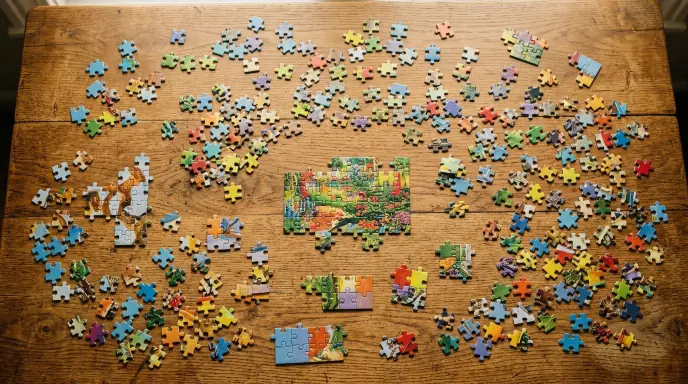
Some casual alternatives work naturally in conversation, but they are not interchangeable with connections in every situation.
21. Ties
Example: “She still has ties to her old neighborhood.”
Natural When: Talking casually about social, family, cultural, or professional relationships.
Avoid When: Writing technical or highly formal documents.
Tone: Conversational.
22. Links
Example: “There are a few links between the two stories.”
Natural When: Talking about relationships between ideas or events.
Avoid When: A specific formal relationship needs to be identified.
Tone: Casual to neutral.
23. Contacts
Example: “I have a few contacts who might be able to help.”
Natural When: Discussing professional or social networking.
Avoid When: You mean emotional closeness rather than people you know.
Tone: Casual and practical.
24. Bonds
Example: “The trip helped them build stronger bonds.”
Natural When: Talking about friendship, family, or emotional closeness.
Avoid When: Referring to a weak or purely professional association.
Tone: Warm and conversational.
25. Links
Example: “I can see some links between those two ideas.”
Natural When: Discussing ideas, events, or concepts.
Avoid When: You need to describe a formal institutional relationship.
Tone: Simple and conversational.
True Synonyms vs. Contextual Alternatives
Not every alternative listed above can replace connections in every sentence.
| Type | What It Means | Can It Replace the Original? |
|---|---|---|
| True synonym | A word with nearly the same meaning in the same context | Often |
| Near synonym | A word with a closely related meaning but some difference | Sometimes |
| Contextual alternative | A word that works only in a particular situation | Depends on context |
| Broader expression | A term covering a wider category | Sometimes |
| Narrower expression | A more specific type of connection | Only in relevant contexts |
| Formal equivalent | A more professional way to express the idea | Usually in formal contexts |
For example, relationships can often replace connections when discussing people. However, correlations should not replace connections when talking about friendships. Similarly, attachments may describe physical joining but not necessarily a professional network.
Industry-Specific Usage
Business Writing
Business writers often use relationships, partnerships, affiliations, networks, contacts, and ties.
Instead of:
Our company has many connections with suppliers.
You could write:
Our company has strong relationships with its suppliers.
Or:
Our company maintains a reliable network of suppliers.
The first emphasizes relationships; the second emphasizes the broader group.
Corporate Communication
For reports, announcements, and internal documents, relationships, partnerships, associations, linkages, and interdependencies can provide greater precision.
Example:
The report examines the interdependencies among departments.
This is more specific than simply saying:
The report examines the connections among departments.
Academic Writing
Academic writing benefits from precise alternatives such as relationships, associations, correlations, linkages, interrelationships, and correspondences.
For example:
The study investigates the relationship between screen time and sleep.
If statistical evidence is involved, you might instead write:
The study identifies a correlation between screen time and sleep duration.
The second sentence makes a more specific claim.
Customer Service
Customer-facing writing usually benefits from simple words such as link, contact, relationship, access, or connection.
Example:
We will connect you with the appropriate support team.
This is often clearer than:
We will establish an interdepartmental linkage for your request.
Simple language is usually more helpful to customers.
Legal Writing
Legal documents require special care because a general word such as connection may not carry the same meaning as a defined legal term.
Depending on the context, legal writing may use terms such as relationship, affiliation, association, linkage, or nexus. However, these words are not automatically interchangeable.
For legal documents, the exact wording should reflect the intended legal relationship and applicable jurisdiction.
Email Communication
Professional emails often work well with relationship, contact, partnership, association, or link.
For example:
I appreciate the opportunity to strengthen our relationship.
This is more natural in a business email than a highly technical term such as interdependency.
Email Examples
1. Client Relationship
Subject: Strengthening Our Working Relationship
Dear Sarah,
Thank you for your continued support throughout the project. We value our working relationship and look forward to collaborating on the next phase.
Best,
Daniel
2. Professional Contact
Subject: Introduction to a Potential Contact
Hi James,
I wanted to introduce you to a professional contact who may be able to help with your upcoming project. I believe your teams could benefit from speaking with each other.
Best,
Maria
3. Business Partnership
Subject: Exploring a New Partnership
Hello David,
Thank you for discussing the possibility of working together. We are interested in exploring a partnership that could benefit both organizations.
Kind regards,
Alex
4. Academic Association
Subject: Research Collaboration
Dear Professor Lee,
I am writing regarding a possible research association between our departments. I believe our areas of study overlap in several useful ways.
Sincerely,
Nadia
5. Vendor Relationship
Subject: Continuing Our Supplier Relationship
Hello Mark,
We appreciate the reliability your team has provided throughout the past year. We look forward to continuing our relationship and discussing future requirements.
Best regards,
Thomas
6. Internal Workplace Communication
Subject: Improving Team Collaboration
Hi Team,
I think stronger communication between our departments could help us resolve issues more quickly. Let’s discuss practical ways to improve our working relationships.
Thanks,
Emily
Short Dialogue Examples
Workplace
Person A: Do you have any contacts in the marketing department?
Person B: Yes. I know someone who can probably help us with the campaign.
Classroom
Person A: What’s the connection between these two historical events?
Person B: The first event created conditions that contributed to the second.
Customer Service
Person A: Can you connect me with someone who handles billing?
Person B: Absolutely. I’ll transfer you to the billing team.
Casual Conversation
Person A: Do you still have ties with your old classmates?
Person B: Yes, I still talk to a few of them.
Professional Discussion
Person A: What relationship does this result have with our earlier findings?
Person B: The results appear to support the same general pattern.
How to Replace “Connections” in a Sentence
Example 1
Original:
The company has many connections with local businesses.
Alternative:
The company has strong relationships with local businesses.
Why it works:
Relationships sounds more deliberate and professional.
Example 2
Original:
The study found connections between diet and sleep.
Alternative:
The study found an association between diet and sleep.
Why it works:
Association fits analytical and academic writing.
Example 3
Original:
She has many connections in the publishing industry.
Alternative:
She has many contacts in the publishing industry.
Why it works:
Contacts clearly refers to people she knows professionally.
Example 4
Original:
The two countries have strong connections.
Alternative:
The two countries have strong ties.
Why it works:
Ties is natural for political, cultural, economic, and social relationships.
Example 5
Original:
The researchers examined the connections among the variables.
Alternative:
The researchers examined the relationships among the variables.
Why it works:
Relationships is precise and natural in research writing.
Example 6
Original:
The two organizations created new connections.
Alternative:
The two organizations formed a partnership.
Why it works:
Partnership adds the important idea of cooperation.
Example 7
Original:
There are connections between the two systems.
Alternative:
There are linkages between the two systems.
Why it works:
Linkages emphasizes structural relationships between systems.
Example 8
Original:
The report discusses connections among several economic factors.
Alternative:
The report discusses the interrelationships among several economic factors.
Why it works:
Interrelationships is appropriate when several factors influence or relate to one another.
Example 9
Original:
The research showed connections between the variables.
Alternative:
The research showed correlations between the variables.
Why it works:
Correlations is more precise when the relationship has been statistically measured.
Comparison of the Most Useful Alternatives
| Phrase | Tone | Meaning / Scope | Best Use | Example |
|---|---|---|---|---|
| Relationships | Neutral/Formal | General links between people or things | Business, social, academic | Strong relationships |
| Associations | Formal | Recognized relationship or link | Research, business | An association between factors |
| Links | Neutral | General relationship or connection | Ideas, websites, systems | Links between events |
| Ties | Neutral | Social, cultural, or professional relationships | People, organizations | Strong community ties |
| Bonds | Warm | Strong emotional relationships | Family, friendship | Close bonds |
| Contacts | Neutral | People known professionally or socially | Networking | Industry contacts |
| Partnerships | Formal | Cooperative relationship | Business | Strategic partnership |
| Affiliations | Formal | Formal organizational relationship | Academic, professional | Institutional affiliations |
| Correlations | Technical | Measurable relationship between variables | Research, statistics | Correlation between variables |
| Networks | Neutral/Formal | Interconnected group | Business, technology | Professional network |
| Linkages | Formal | Structural connections | Policy, research | Economic linkages |
| Interrelationships | Formal | Complex relationships among elements | Academic writing | Interrelationships among factors |
Which Alternative Should You Choose?
For Formal Writing
Choose relationships, associations, affiliations, linkages, or interrelationships depending on the exact meaning.
For Business Communication
Use relationships, partnerships, contacts, networks, or associations.
For Academic Writing
Use relationships, associations, correlations, linkages, or interrelationships when they accurately describe the evidence.
For Legal Writing
Choose terminology based on the precise relationship being described. Avoid replacing a legally meaningful term with a casual synonym simply for variety.
For Professional Email
Relationship, partnership, contact, and association are usually natural choices.
For Everyday Conversation
Use simple words such as ties, links, relationships, contacts, or bonds.
Grammar and Usage Guide
Connections Is Usually a Plural Noun
The singular form is connection.
There is a strong connection between the two ideas.
The plural is connections.
There are several connections between the two ideas.
“Connection Between” Is Common
Use between when identifying a relationship involving two things.
There is a connection between exercise and sleep.
“Connections Among” Works for Multiple Things
When discussing three or more people, factors, or ideas, among is often appropriate.
Researchers examined the connections among several variables.
“Connection With” Is Common for People and Organizations
She has a strong connection with the local community.
You may also see connection to:
He has a connection to the organization.
The best preposition depends on the intended meaning and sentence structure.
“Make Connections” and “Build Connections”
Both are common.
Students can make connections with classmates.
Professionals often build connections through networking events.
Build connections often suggests that the relationship develops over time.
“Connection” Can Have Several Meanings
The word may refer to:
- A relationship between people
- A relationship between ideas
- A physical joining
- A technological link
- A transportation link
- Internet access
- A relationship between events
Because of these meanings, the correct synonym depends heavily on context.
Common Mistakes to Avoid
1. Treating Every Alternative as an Exact Synonym
Connections and correlations are not always interchangeable. Correlation has a more specific analytical meaning.
2. Using “Bonds” for Weak Relationships
Bonds usually suggests closeness or strength. It may sound exaggerated when describing a casual acquaintance.
3. Using “Affiliations” for Friendships
An affiliation usually suggests a formal or recognized association, not simply knowing someone.
4. Using “Partnerships” for Every Relationship
A partnership generally involves cooperation or shared activity. A simple connection does not necessarily involve either.
5. Making Academic Writing Too Vague
Replacing connections with another broad word does not automatically make academic writing more precise. Choose a term that describes the actual relationship.
6. Using Technical Terms in Casual Writing
Words such as interdependencies and interrelationships can sound unnecessarily complicated in everyday conversation.
7. Confusing Contacts With Relationships
A contact is usually a person you know or can communicate with. A relationship can describe the nature or quality of the connection itself.
8. Ignoring Tone
Bonds sounds warmer than associations. Interdependencies sounds more technical than ties. Tone matters.
When Not to Use “Connections”
There are situations where a more precise word can improve your writing.
When You Mean Professional Relationships
Use contacts, relationships, networks, or partnerships instead of the broad connections.
When You Mean Statistical Relationships
Use correlations, associations, or another technically accurate term.
When You Mean Emotional Closeness
Use bonds, relationships, or ties.
When You Mean Formal Organizational Relationships
Use affiliations, partnerships, or associations.
When You Mean Physical Joining
Use attachments, joints, junctions, interfaces, or links, depending on the object.
When You Mean Multiple Interdependent Factors
Use interrelationships or interdependencies when those concepts are actually intended.
When the Original Word Is Clearer
Do not replace connections merely to avoid repetition. If it is the clearest and most accurate word, keeping it is often the best choice.
Advanced Writer Tips
Tone Control
Choose words according to the level of formality. Ties and links are relatively natural, while interrelationships and linkages are more formal.
Professional Email Etiquette
Professional emails generally benefit from clear words such as relationship, partnership, contact, and collaboration. Avoid complicated vocabulary when a simple phrase communicates the same idea.
Politeness
Word choice can affect how warm a sentence sounds. Compare:
We value our business association.
with:
We value our relationship.
The second can sound more personal and appreciative.
Context Alignment
Ask what kind of connection you actually mean. Is it social, professional, physical, technological, statistical, or conceptual? Once you identify the type, the best alternative becomes much easier to choose.
Precision
Do not use a stronger or narrower term simply because it sounds sophisticated. For example, partnership implies cooperation, while correlation implies a particular kind of relationship between variables.
Readability
Prefer the simplest accurate word.
The study found a relationship between the variables.
may be clearer than:
The study identified an interrelationship between the variables.
Use the more technical version only when its additional precision is useful.
Related Questions About Connections
What is another way to say connections?
Depending on the context, you can say relationships, links, ties, associations, contacts, bonds, networks, affiliations, partnerships, or interactions. The best choice depends on whether you are discussing people, organizations, ideas, systems, or measurable relationships.
What is a professional alternative to connections?
Relationships, associations, partnerships, affiliations, contacts, and networks are useful professional alternatives. The choice depends on whether you mean personal relationships, business cooperation, organizational membership, or professional contacts.
What is a formal alternative to connections?
Formal alternatives include associations, relationships, affiliations, linkages, interrelationships, correspondences, and interdependencies. Some are narrower than connections, so they should be selected according to the intended meaning.
Is connections a formal word?
Connections is a neutral word rather than an especially formal one. It works in professional and academic writing, but a more precise term such as association, correlation, affiliation, or interrelationship may be preferable in specialized contexts.
Can I use relationships instead of connections?
Often, yes, especially when discussing people, organizations, or ideas. However, relationships may imply an ongoing or meaningful association, while connections can describe a much broader range of links.
What is the difference between connections and associations?
A connection is a broad link between people, things, ideas, or events. An association often suggests a recognized or identifiable relationship and is especially common in formal, academic, and analytical writing.
What is the difference between connections and relationships?
Connections is broader and can refer to physical, technological, conceptual, or social links. Relationships usually emphasizes how two or more people, things, or ideas relate to each other over time or within a particular context.
FAQs
1. What are the closest synonyms for connections?
The closest alternatives depend on meaning, but relationships, links, ties, associations, and interactions are among the most broadly useful. For professional situations, contacts, networks, partnerships, and affiliations may be more precise.
2. What is the best synonym for connections in business writing?
Relationships is often a strong general choice, while partnerships works when two organizations actively cooperate. Contacts refers to people you know, and networks refers to broader groups of interconnected people or organizations.
3. What is a formal word for connections?
Formal alternatives include associations, affiliations, linkages, interrelationships, correspondences, and interdependencies. These words have different meanings, so the most formal-sounding option is not necessarily the most accurate.
4. What can I say instead of “professional connections”?
You can use professional relationships, industry contacts, business relationships, professional network, or professional affiliations. The appropriate choice depends on whether you mean people you know, organizations you belong to, or relationships you have developed.
5. Are ties and connections interchangeable?
They can be interchangeable in some social, cultural, professional, and organizational contexts. However, ties often emphasizes a relationship between people or groups, while connections has a wider range of meanings.
6. Is “correlations” a synonym for “connections”?
Only in certain analytical contexts. Correlation describes a statistical or observable relationship between variables. It should not normally replace connections when discussing friendships, professional contacts, physical attachments, or general associations.
7. How do I choose the right synonym for connections?
First identify what kind of connection you mean. For people, consider relationships, ties, bonds, or contacts. For organizations, consider affiliations or partnerships. For research, consider associations, correlations, or interrelationships where accurate.
Key Takeaways
- Connections is a broad word, so the best replacement depends on context.
- Relationships, links, ties, and associations are among the most versatile alternatives.
- Use contacts, networks, partnerships, or affiliations for specific professional meanings.
- Use correlations only when describing an appropriate analytical or statistical relationship.
- Choose the simplest accurate word instead of replacing connections merely for variety.
Conclusion
The best synonym for connections depends on exactly what you want to communicate. Relationships works well for people and general associations, while links is useful for ideas, systems, and websites.
Ties often describes social or professional relationships, bonds suggests emotional closeness, and contacts focuses on people you know. In formal or specialized writing, terms such as associations, affiliations, linkages, correlations, and interrelationships can provide greater precision.
The key is not to choose the most sophisticated-looking word. Choose the word that preserves your intended meaning, matches your audience, and fits the tone of the sentence.
If the broad word connections already communicates your idea clearly, there is no need to replace it. Good word choice is about precision and clarity, not simply avoiding repetition.